
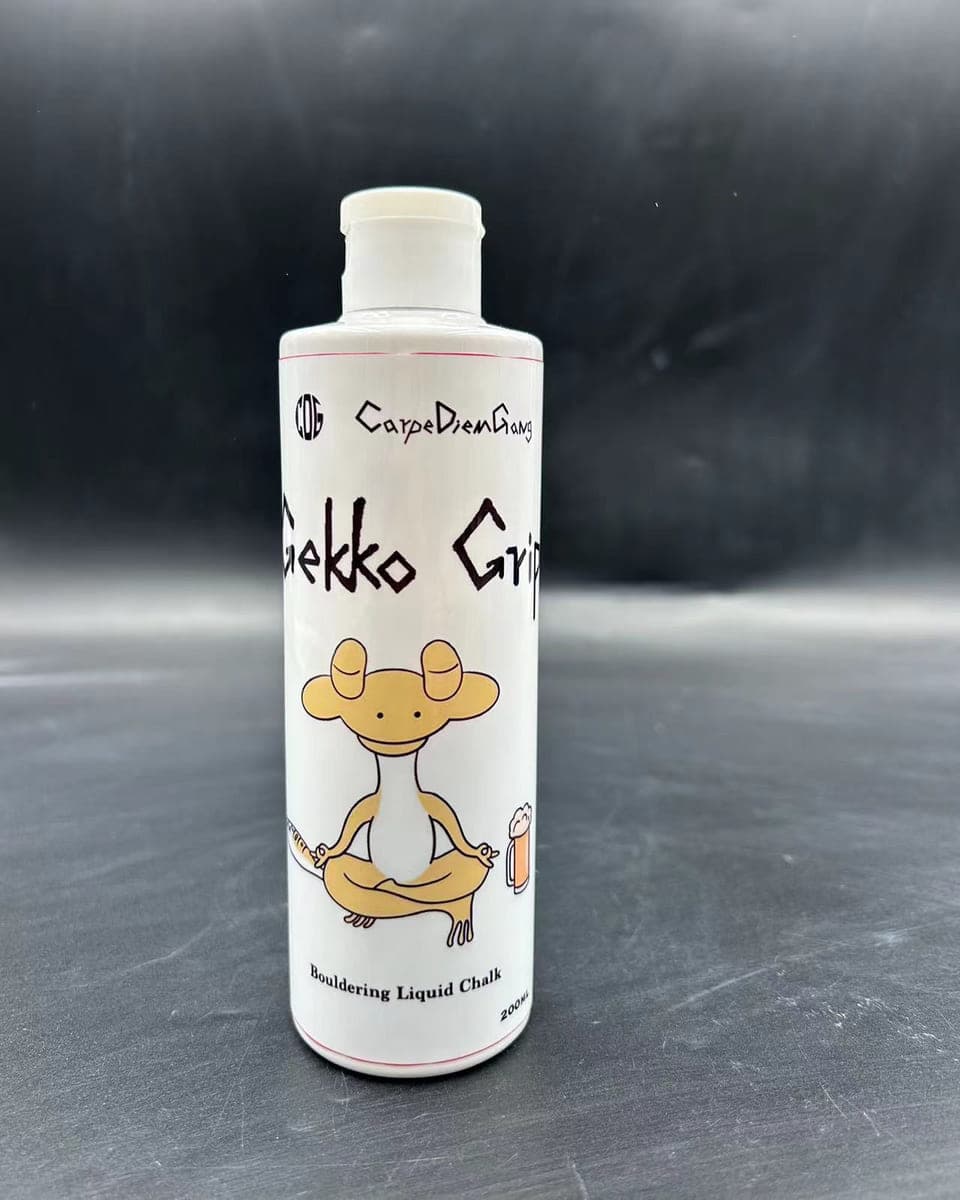
Gekko Grip
CZK 150
In stock > 5 pcs
Liquid chalk for climbing and bouldering. Below: when liquid is the right call instead of loose chalk, what to check before you buy and where it earns its place. The product itself is right underneath.
We ship liquid chalk to Czechia only.
1 product
CZK 150
In stock > 5 pcs
Liquid chalk goes on your hands and is left to dry. Once it has dried nothing comes off as powder, which is why you can take it into a gym that limits or bans loose chalk. That is the main reason to reach for it. The second is practical: the bottle stays in your bag, you do your hands before you set off, and there is no pouch to manage. It is not a lifetime commitment either, since liquid and loose can be alternated depending on where you climb.
Two things, both quick. One: your gym's rules. Some climbing gyms ban gum rosin, and it is a common ingredient in liquid chalk. Gekko Grip contains it too, so read the house rules before you take it in. If the rules are not clear, asking the gym is faster than hunting for them. Two: your skin. Gekko Grip contains ethanol, and grazed or sensitive skin will tell you so. The full list of what is inside, and what the label warns about, sits on the product page.
Indoors the appeal is mostly the dust, and not leaving a mess behind. On a boulder problem it helps that you can do your hands once before a set of attempts and then stop thinking about it. Outdoors the weather and the rock decide more than the form of the chalk does, so take both if you have them. We do not sell loose chalk, so we are not making that choice for you. The bottle size and the rest of the numbers sit in the spec table on the product page.